Is a Tribeca penthouse the ultimate Manhattan prize, or a purchase that demands sharper due diligence than almost any other property type? If you are considering buying at the top of this market, you are likely balancing lifestyle goals with serious financial and building-level questions. The good news is that with the right framework, you can evaluate a penthouse beyond the glossy photos and understand what truly matters in Tribeca. Let’s dive in.
Why Tribeca penthouses stand apart
Tribeca is one of Manhattan’s most expensive neighborhoods, with StreetEasy reporting a current median sale price of $3.5 million and a median base rent of $7,897. The neighborhood is known for a mix of converted cast-iron lofts and dramatic new buildings, which gives penthouse buyers a wide range of product types to compare.
That variety is exactly what makes buying here more nuanced. In Tribeca, a penthouse is rarely just about being on the top floor. You are often comparing loft volume, outdoor space, privacy, building services, and the quality of either a historic conversion or a newer development envelope.
At the trophy end of the market, pricing can move into a different category entirely. Current listings include a penthouse at 145 Hudson Street asking $59.5 million, with 7,500 interior square feet and a 4,500-square-foot wraparound terrace. That kind of asking price reinforces an important point: scarcity and execution drive value at the top.
Start with the building type
Historic loft conversions
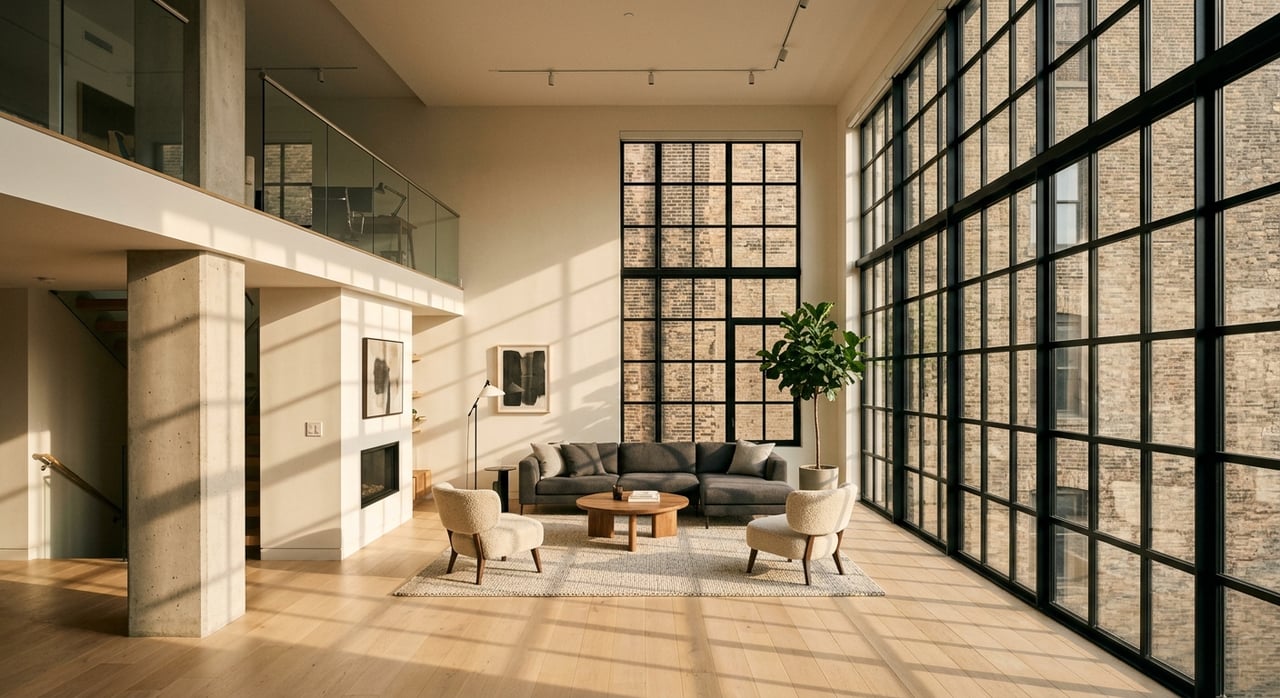
Many Tribeca penthouses sit within former industrial buildings that were converted to residential use. These homes can offer features buyers love, including oversized windows, exposed structural character, and dramatic ceiling heights.
But older buildings require close review. The New York Attorney General advises buyers to examine the condition of major systems such as the facade, roof, elevators, HVAC, windows, electrical wiring, and plumbing. In older conversions, expensive future work can affect both your ownership costs and your renovation plans.
Newer full-service buildings
Newer Tribeca towers often attract buyers who prioritize service, privacy, and turnkey living. Current listings highlight features such as full-time doormen, attended lobbies, garage parking, and direct elevator access.
That can make daily life simpler, but it does not mean you should skip the details. You still need to evaluate carrying costs, building rules, and how the unit’s layout and outdoor space compare with other luxury options in Manhattan.
Look beyond square footage
A penthouse can sound impressive on paper and still feel less special in person. In Tribeca, ceiling height and usable volume often matter just as much as total square footage.
Current listings show meaningful variation, from about 10.8-foot ceilings in renovated lofts to 14-foot ceilings in penthouses, with some older loft penthouses advertising 18-foot volume. That difference changes how open, bright, and flexible a home feels once furnished.
What to check in person
When you tour, focus on how the space actually lives:
- Measure how much of the main entertaining area feels open and unobstructed
- Ask where beams, soffits, or mechanical drops reduce usable height
- Notice whether light reaches the center of the apartment
- Consider whether room proportions support the way you want to furnish and entertain
A large number on a floor plan is only part of the story. In a luxury purchase, livability and scale perception matter.
Treat outdoor space as a legal feature
Private outdoor space is one of the biggest value drivers in a Tribeca penthouse. Listings frequently spotlight terraces and rooftop areas, including nearly 1,000 square feet of private outdoor space at 19 Park Place and the large wraparound terrace at 145 Hudson Street.
Still, outdoor space should never be treated as just a lifestyle perk. The New York Attorney General notes that in sponsor sales, the offering plan controls obligations for ancillary spaces such as rooftop cabanas. If a feature is not promised in the plan, the sponsor is not required to deliver it.
For a resale, the same practical lesson applies. You should confirm exactly how the outdoor space is documented and who is responsible for maintenance.
Outdoor space questions to ask
- Is the terrace private, exclusive-use, or shared?
- Is that right documented in the deed, unit plan, or house rules?
- Who maintains surfaces, drainage, irrigation, railings, or lighting?
- Are there restrictions on landscaping, outdoor kitchens, or shade structures?
These details can affect both enjoyment and resale value.
Understand privacy and access
In Tribeca’s luxury market, privacy often carries a premium. Buyers routinely pay attention to whether a penthouse has direct elevator access, a key-locked elevator, or a more shared arrival experience.
Current listings underline this distinction. Examples in the market include homes reached by key-locked elevator and penthouses served by a 24-hour attended lobby. If discretion matters to you, these are not small differences.
You should also ask how many units share the floor and how visitors are handled. A top-floor home can feel very different depending on the building’s circulation, staffing, and entry sequence.
Review carrying costs carefully
Purchase price is only one part of the financial picture. In Manhattan’s luxury market, monthly carrying costs can materially change the value equation between two seemingly similar penthouses.
Miller Samuel’s 1Q26 Manhattan report found that co-op maintenance averaged $3,007 per month, while condo common charges plus taxes averaged $4,559 per month. Those are broad Manhattan luxury benchmarks, but they are useful when comparing a Tribeca opportunity against the rest of the market.
Compare these numbers before you buy
- Monthly maintenance or common charges
- Real estate taxes, if applicable
- Any ongoing assessments
- Reserve strength and recent financial reports
- Planned capital work that could increase future costs
A penthouse with a lower entry price can become less attractive if the building is facing major facade, roof, elevator, plumbing, or HVAC work.
Know whether it is a co-op or condo
Ownership structure matters in Tribeca, especially when you are buying at a premium price point. In a co-op, you are buying shares in a corporation allocated to the apartment and receiving a proprietary lease. Each co-op owner pays maintenance based on shares.
That structure can come with board approval requirements and rules around financing, alterations, and subletting. If your plans include renovation flexibility or future leasing, those rules deserve early review.
For some resale buyers, another wrinkle is that a current offering plan may not exist, particularly in sponsor-controlled or older buildings. In that case, board documents and title-related materials become even more important during due diligence.
Pay attention to historic district rules
Tribeca’s architecture is a major part of its appeal, and many parts of the neighborhood fall within LPC-designated historic districts, including Tribeca East, North, South, South Extension, and West. If the building is within one of those districts, exterior changes may require advance LPC approval.
This matters more often than buyers expect. Window replacement, terrace enclosures, parapet work, roof additions, and visible facade changes can all trigger review, even if you are not changing the interior.
Why this matters for penthouse buyers
Penthouse buyers often assume they can personalize rooflines, terraces, or exterior openings with relative ease. In a designated historic district, that assumption can create delays, redesign costs, or limits on what is allowed.
Before you rely on a future renovation idea, confirm the building’s status on the LPC map and review what kind of exterior work may need approval.
Due diligence that matters most
At this level of the market, diligence should be as tailored as the property itself. The New York Attorney General recommends reading the entire offering plan and consulting an attorney before signing, because the plan governs sponsor obligations and should match written marketing claims.
For existing buildings and conversions, the AG also recommends reviewing engineer disclosures, written defect lists, board minutes, the most recent financial report, and any posted violations. These documents can tell you whether the building has deferred maintenance, recurring issues, or upcoming capital needs.
A practical Tribeca penthouse checklist
Use this checklist as you narrow your options:
- Confirm actual ceiling heights and note any areas with reduced usable volume
- Verify whether outdoor space is deeded, exclusive-use, or subject to building rules
- Ask whether elevator access is direct, key-locked, or shared
- Review monthly carrying costs, assessments, and reserve levels
- Investigate planned work on the roof, facade, elevator, plumbing, electrical, or HVAC systems
- Determine whether the building sits in an LPC historic district
- If it is a co-op, review board approval, financing, alteration, and subletting rules
Why timing and scarcity matter now
Today’s broader Manhattan luxury backdrop adds another layer to the decision. Miller Samuel reports that Manhattan co-op and condo inventory fell 16.7 percent year over year in 1Q26, while luxury inventory dropped 26.9 percent to 903 units, the lowest level since 2Q08.
For you as a buyer, that means standout penthouses may face limited direct competition. In a tight market, the best homes often hold value through a mix of scarcity, privacy, outdoor space, and building reputation.
In Tribeca, that pattern is especially clear. This is a loft-driven, high-price neighborhood where truly exceptional top-floor homes are limited by design, building stock, and location. When a penthouse checks the right boxes, it can be difficult to replicate.
The bottom line for Tribeca buyers
Buying a Tribeca penthouse is about more than views and a top-floor address. The smartest buyers look closely at building type, legal rights tied to outdoor space, actual interior volume, privacy, carrying costs, and any restrictions that could shape future renovations.
In a neighborhood where product varies widely from historic loft conversions to newer full-service towers, details drive both lifestyle and long-term value. If you approach the search with a disciplined framework, you can identify the homes that truly justify their pricing and avoid expensive surprises later.
If you are weighing a Tribeca penthouse purchase and want tailored guidance on product type, building analysis, and market positioning, New York Collaborative can help you navigate the search with discretion and a Manhattan-first perspective.
FAQs
What should you verify before buying a Tribeca penthouse terrace?
- You should confirm whether the outdoor space is private, exclusive-use, or shared, where that right is documented, and who is responsible for maintenance and any restrictions on use.
How do carrying costs affect a Tribeca penthouse purchase?
- Carrying costs can significantly change the real value of a purchase, so you should compare maintenance or common charges, taxes, assessments, reserve levels, and upcoming capital work before making a decision.
Why do ceiling heights matter in a Tribeca penthouse?
- Ceiling heights affect how open, bright, and flexible the home feels, and usable volume may differ from quoted square footage if beams or mechanicals reduce the sense of space.
What do historic district rules mean for Tribeca penthouse buyers?
- If a building is in an LPC-designated historic district, exterior changes such as window replacement, terrace enclosures, parapet work, roof additions, or visible facade changes may require advance approval.
What is the difference between a Tribeca co-op penthouse and condo penthouse?
- In a co-op, you buy shares in a corporation and receive a proprietary lease, while condos typically involve different ownership and operating structures, and co-ops may also have stricter board, financing, alteration, and subletting rules.
