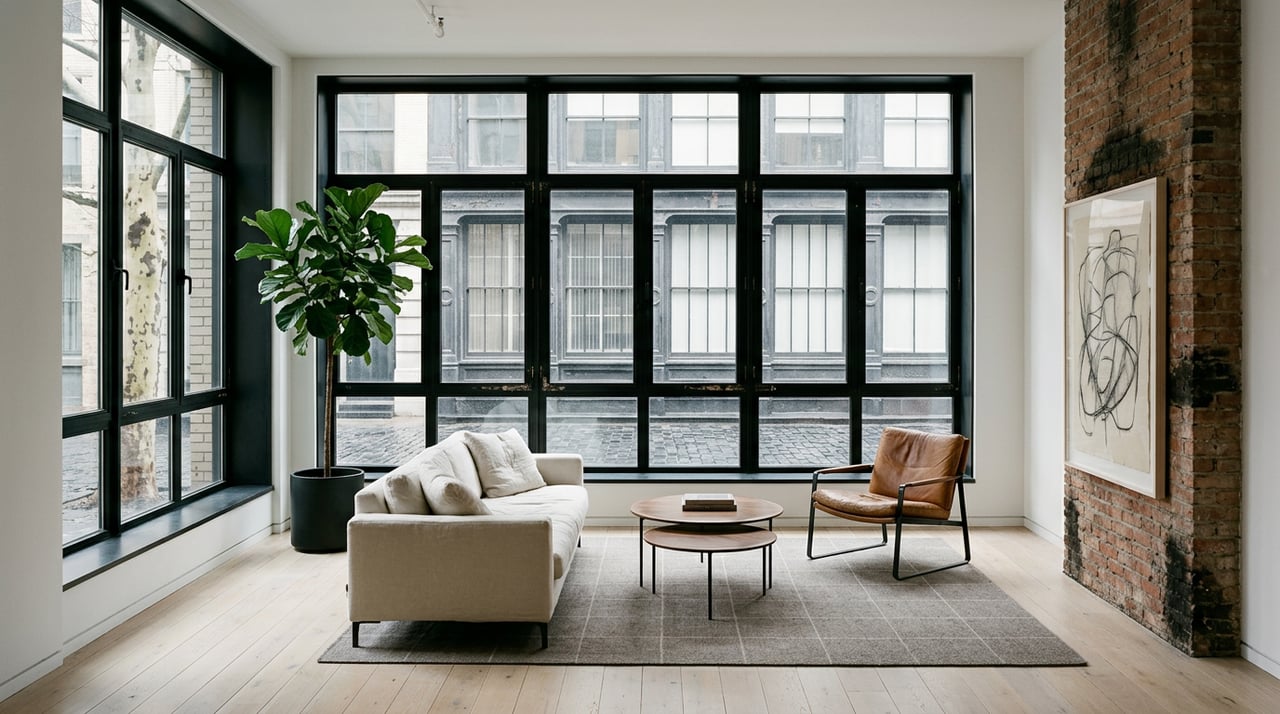
What does everyday life look like in a true Tribeca loft? Maybe you picture tall windows, open rooms, and quiet cobblestones just steps from the Hudson. If that is your vision, you are in the right place. In this guide, you will learn how Tribeca’s architecture shapes its homes, what the streets and riverfront offer day to day, and what to know about pricing and purchase details. Let’s dive in.
Tribeca at a glance
Tribeca, short for “Triangle Below Canal,” grew from 19th and early 20th century warehouses and factories that now define its residential character. Local historic districts protect many cast‑iron and masonry facades, which is why the blocks feel cohesive and cinematic. You can read more about the neighborhood’s preservation background in the summary of Tribeca historic districts.
Cobblestone alleys add to the mood. Staple Street and its rare pedestrian skybridge are among Tribeca’s most photographed features, as local coverage shows in a story on the Staple Street skybridge. While the area reads residential and calm compared with Midtown, you still have quick access to Downtown’s hubs and services.
For context, ZIP code 10013, which covers much of Tribeca, skews higher income and renter‑dominant. ACS‑based summaries put the owner share near 30 percent and renter share near 70 percent, with household income and home values well above city averages. You can see the overview on the 10013 ZIP profile.
Transit is simple. The Franklin Street 1 train and the Chambers Street station complex put most lines within a short walk. The Franklin Street station page gives a quick sense of connections, and PATH access sits just south at the World Trade Center.
What defines a Tribeca loft
Signature interior features
Classic Tribeca lofts feel open and tactile. Expect high ceilings that often reach 10 to 16 feet, exposed brick and timber or steel columns, wide rooms that favor large-scale furniture, and big warehouse-style windows. Many homes keep industrial details like steel hardware or mezzanines, which add drama and flexibility.
Lighting matters here. Large windows and tall volumes bring an airy, gallery-like quality. Floors range from old plank wood to polished concrete, which gives you a clean base for contemporary or mid-century pieces.
Two main building types
You will see two broad families of product:
- Converted industrial lofts. These prewar masonry or cast‑iron buildings were adapted for residential use, often as boutique co‑ops or condos. They deliver authentic details, generous floor plates, and a sense of history.
- New luxury condominiums. Modern buildings such as 56 Leonard or 70 Vestry offer full-service amenities, river or skyline views, and loft‑scale interiors with contemporary finishes. They tend to carry higher common charges and more flexible ownership policies than older co‑ops.
Everyday life on the streets and river
Cobblestones, parks, and the Hudson
Tribeca’s quieter blocks, small parks, and human‑scale streets set an easy daily rhythm. The riverfront is a major perk. At Hudson River Park, Pier 25 features a large playground, mini‑golf, volleyball courts, and a skate plaza, which makes it a go‑to for families and active residents. See the details on the Pier 25 playground.
Pier 26 and the surrounding promenades add ecology programming and more waterfront paths. The boardwalk and bike route make it simple to run, bike, or stroll at golden hour. The Park’s Tribeca section gives a concise overview of amenities and access on the Hudson River Park Tribeca page.
Dining and culture close to home
You have plenty of neighborhood favorites and destination dining. Locanda Verde at the Greenwich Hotel is a longtime anchor that blends a neighborhood mood with chef-driven cooking. For a taste of the scene, explore Locanda Verde.
Culture runs deep. The Tribeca Festival draws national attention each year and brings screenings, talks, and live events to the neighborhood. See the latest dates and programming in the Tribeca Festival announcement. Tribeca also retains a dense creative presence with galleries and studios woven into its loft fabric.
The real estate picture
Price snapshot and what it means
Tribeca ranks among Manhattan’s most expensive markets. Recent provider snapshots place median figures roughly in the 2.9 million to 4.0 million range, with gaps between median asking prices and median closed sales due to sample size and timing. You will also see wide swings in price per square foot based on building age, floor height, outdoor space, and views.
Price per foot and product tiers
High‑end new development often lands in the 2,400 to 4,000 dollars per square foot tier on premium lines and penthouses. Classic conversions and many co‑ops tend to show lower numbers, often in the mid‑1,400 to 2,200 dollars per square foot range, depending on layout and condition. Townhouses and compound properties are rare and can trade far above neighborhood medians.
Buyer mix and pace
Many buyers are end users who value space, design, and proximity to the river. At the top end, a high share of deals close in cash, and desirable homes can move quickly when priced well. For co‑ops, expect financial disclosure and board approval as part of the process.
Buying smart: legal, historic, and practical
Loft Law and building status
Legal status matters in loft neighborhoods. The NYC Loft Law created the Interim Multiple Dwelling category and a path to legalize certain former commercial buildings that had residential occupancy during defined windows. Read the Loft Board’s overview on the Loft Board About page and the Loft Law rules summary. Status can affect financing, safety upgrades like sprinklers, and potential rent-stabilization history.
Co‑op, condo, or IMD
Understand the building regime before you bid. Co‑ops often require board approval and can limit subletting or financing. Condos and new developments usually allow more flexibility and may have higher common charges tied to amenities. Some lofts remain within Loft Board jurisdiction, so confirm where a specific building stands.
Landmark districts and renovations
Tribeca’s landmarked districts protect exterior character. Façade changes and window replacements inside those zones require approvals, which helps preserve the streetscape. Interiors in most units face fewer constraints, but always verify the rules for your address using resources on the Tribeca historic districts.
Daily-life tradeoffs to weigh
- Noise and traffic vary by block. The cobblestones look great in photos, but they are louder for vehicles and can make moving days trickier.
- Parking is limited. Private garages are rare and command a premium when available.
- Family resources are close. Hudson River Park’s playgrounds and fields are a major draw, and local families often consult current Department of Education zoning for nearby public schools.
Is Tribeca right for you?
If you want scale, light, and materials that tell a story, Tribeca’s lofts deliver. If you also want waterfront access, an intimate dining scene, and a calm streetscape that still connects quickly to the rest of Manhattan, the neighborhood is a strong fit. The key is to match your lifestyle to the right building type and to confirm the legal and financial framework early. A focused plan will help you move decisively when the right home appears.
Ready to explore specific buildings, pricing, and timing strategies tailored to your goals in Tribeca and across Manhattan? Request a bespoke consultation with the New York Collaborative.
FAQs
What sets Tribeca lofts apart from SoHo lofts?
- Tribeca often feels quieter and more residential, with larger warehouse floor plates on some blocks and direct access to Hudson River Park, while SoHo has denser retail corridors and more tourist traffic.
How much should I budget to buy in Tribeca?
- Recent snapshots place median prices roughly in the 2.9 million to 4.0 million range, with smaller co‑ops sometimes below that and trophy properties well above it; always compare asking versus closed sales.
What legal checks matter when buying a Tribeca loft?
- Confirm whether the building is a co‑op, condo, or covered by the Loft Law, since status affects financing, safety upgrades, and rights; start with the Loft Board’s About page for context.
What is daily life like near Hudson River Park in Tribeca?
- Expect easy access to playgrounds, mini‑golf, volleyball, and bike paths at Piers 25 and 26, plus long waterfront walks at sunset; see the Pier 25 playground for a snapshot of amenities.
What transit options will I have in Tribeca?
- You are close to multiple subway lines, including the 1 at Franklin Street and several lines at Chambers Street, with PATH access nearby; the Franklin Street station page shows key connections.
