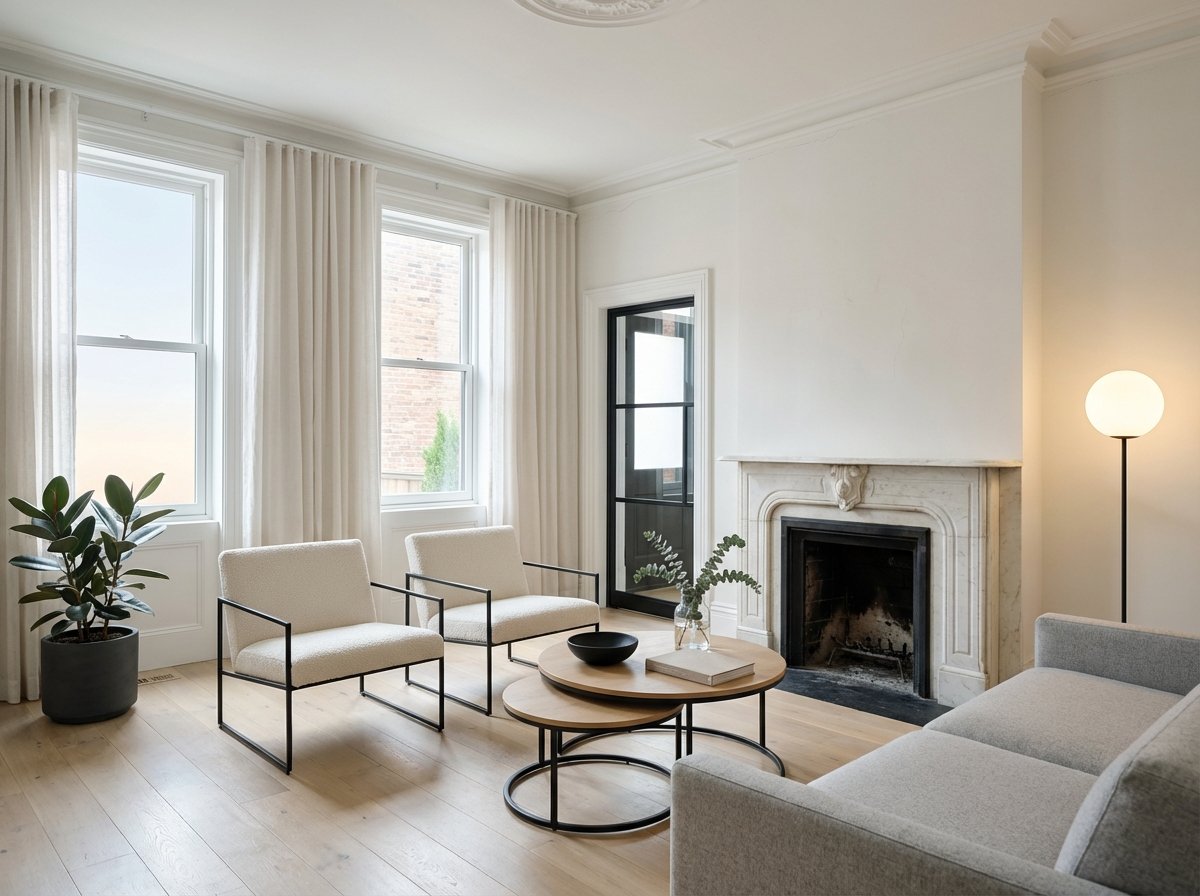
Thinking about selling your Cobble Hill townhouse but unsure how to meet today’s luxury buyer where they are? You’re not alone. High-end Brooklyn townhouses move when they are priced with precision, staged to honor original character, and marketed with rich media that buyers can experience online. This guide gives you a clear, data-backed plan for preparation, pricing, timing, and marketing so you can shorten days on market and protect your sale price. Let’s dive in.
Cobble Hill market, in context
Cobble Hill trades in Brooklyn’s premium townhouse tier. Recent snapshots show medians in the low to mid $2 million range. For example, as of January 2026, Redfin reported a median sale price around $1.96 million, while Realtor.com’s December 2025 window showed a median listing price near $2.425 million and a price per square foot around $1,567. With few monthly townhouse trades, a single luxury sale can swing the numbers.
What does that mean for you? Do not lean on neighborhood medians alone. Instead, build pricing from a narrow set of recent closed townhouse comps on your block or adjacent streets, adjusted for width, depth, outdoor space, and condition. PropertyShark’s trend views confirm Cobble Hill’s premium profile within Brooklyn’s broader market, but your exact comp set should stay hyper local and recent for accuracy.
High-end context also matters. Trade press has noted off-market or private-network deals and contracts for $6–10 million townhouses in the broader Brooklyn market. That does not set your price, but it helps position particularly rare properties for the right audience and timeline. You can review this reporting on high-end townhouse activity in Brooklyn in The Real Deal’s coverage of luxury contracts and off-market transactions.
Price it right, the first time
Pricing is your most powerful lever. In a low-inventory, character-rich market like Cobble Hill, a 3 to 6 percent misprice can drain early traffic and push a listing toward “stale” status. Work from a custom CMA built on tightly comparable closed sales. Adjust for square footage, legal configuration, outdoor space, recent systems upgrades, and whether any alterations carry permits and approvals.
Think about buyer search behavior too. Listing at or just under common filter thresholds can increase visibility in portal searches. This is a practical way to widen your buyer pool without signaling distress or inviting bargain hunting.
Time your launch for momentum
NYC seasonality still favors spring. StreetEasy’s guidance points to early March, with a midweek launch, to capture peak buyer activity and strong weekend showings. If spring is not feasible, early fall is the next best window. Avoid late holiday weeks when attention drops. For exceptional or very high-end homes, plan for a patient but visible campaign that includes targeted outreach and, in some cases, quiet pre-market introductions.
Pre-list checklist that saves time
Assemble provenance and records
Gather renovation receipts, contractor permits, mechanical invoices, architectural drawings, and any Landmarks Preservation Commission approvals if exterior work was done. Clear documentation signals stewardship and helps buyers’ lenders and attorneys move faster.
Address safety and systems first
Repair or service roofing, electrical, plumbing and HVAC before you list. Consider a targeted pre-listing inspection to reduce renegotiation risk. Buyers will forgive style preferences more easily than concerns about core systems.
Handle compliance and disclosures
If your townhouse predates 1978, federal lead-based paint rules apply. Provide the required EPA/HUD pamphlet and offer buyers the opportunity for a lead inspection. The EPA highlights enforcement actions that underscore how important these disclosures are for compliant transactions.
If your home is in a historic district or carries landmark status, exterior changes visible from the street often require LPC review and permits. Disclose prior approvals and include copies in your seller packet. NYC’s homeowner resources page is a helpful overview and a good place to confirm what requires sign-off.
Curate your restoration story
Photograph original details, keep before-and-after images for any restorations, and compile a concise property history. Include these in your listing brochure and data room. Luxury buyers value authenticity and care.
Stage for character and clarity
Your goal is to preserve period details while translating rooms to today’s expectations. Show the parlor-level flow, millwork, mantels, staircase lines, ceiling height, garden access, and any roof deck clearly. Use scaled furnishings that support narrower brownstone rooms, refresh lighting, refinish floors where needed, and lighten heavy drapery or dark paint that hides trim.
Prioritize the parlor, kitchen, and primary suite for staging. These spaces anchor value perception and photography. According to the National Association of REALTORS, many agents report staging leads to a 1 to 10 percent increase in offers and reduced time on market. Even targeted, professional staging for key rooms can produce outsized ROI at this price point.
Build a media stack that sells
High-production visuals and complete information help buyers shortlist your home quickly and confidently. They also increase organic exposure on portals and social channels.
- Professional photography. Your hero exterior and parlor-level images do most of the heavy lifting for clicks and showings. NAR’s research links strong presentation with faster sales and better pricing outcomes.
- Accurate floor plan. Provide a clean 2D plan with dimensions. Many buyers will not tour without one.
- Cinematic video. A 60 to 90 second walkthrough pairs well with social distribution and paid campaigns.
- Interactive 3D tour. Virtual tours encourage longer online engagement and help out-of-area buyers feel confident booking showings.
- Drone and twilight imagery. Aerials showcase gardens and roof decks, and twilight exteriors act as strong thumbnails in feeds. Independent photography data shows twilight images can lift click-throughs meaningfully, making them smart lead-in assets.
- Polished brochure and one-page property brief. Include provenance, upgrades, utility notes, and permit history to reduce friction post-offer.
Combine these assets with consistent branding and a clear property story. Luxury buyers want both the romance of the home and the facts they need to act decisively.
Tactical outreach for Cobble Hill
- Broker-to-broker preview. Host a broker open in the first 48 hours to reach townhouse specialists at established Manhattan and Brooklyn firms. Early expert feedback helps refine copy and guide pricing discipline.
- Geo-targeted digital ads. Focus on high-intent ZIP codes in Manhattan, Brooklyn, and the broader tri-state region. Use a carousel with a twilight hero image and a short video cut for remarketing.
- Quiet pre-market introductions. For top-tier properties, consider a short, private preview to vetted buyers to gauge appetite and potentially secure high-certainty offers. Press coverage confirms that off-market trades occur at the upper end of the Brooklyn townhouse market.
Financing context that shapes your buyer pool
Conforming loan limits increased for 2026. The national baseline for a single-unit mortgage is $832,750, and the high-cost ceiling is $1,249,125. Given Cobble Hill price points, many buyers will use jumbo financing. Jumbo loans can carry different appraisal and underwriting dynamics, which may affect timelines and contingencies. The FHFA provides an overview of 2026 limits and a county lookup to confirm specifics.
A six-week plan to launch well
- Weeks 6 to 4 before launch: Collect permits, approvals, and receipts. Order pre-list inspections as needed. Schedule stager and obtain contractor bids for any priority fixes.
- Weeks 3 to 2: Complete mechanical work and touch-ups. Deep clean. Stage priority rooms. Lock media dates. Draft your brochure and property brief.
- Week 1: Capture photography, twilight exterior, drone, floor plans, and 3D tour. Finalize listing copy and media edits. Confirm any historic-district language is accurate and that approvals are documented.
- Launch week: If possible, go live midweek in early March. Hold a broker open in the first 48 hours. Activate email to broker networks and paid social. Monitor portal metrics and showing feedback daily. Plan a price and strategy review at day 7 to 10.
What you gain with the New York Collaborative
You deserve a campaign that treats your townhouse like the one-of-one property it is. The New York Collaborative pairs senior-broker judgment with SERHANT.’s media and distribution to deliver institutional-grade exposure and boutique attention. That means high-production visuals, editorial storytelling that honors historic character, and coordinated outreach to the right broker networks and qualified buyers. It also means clear advice on pricing, timing, and negotiation so you can sell with confidence.
If you are considering a Cobble Hill sale this year, let’s build a plan tailored to your home and calendar. Request a strategy conversation with the New York Collaborative and we will map the steps that move your result.
FAQs
When is the best time to list a Cobble Hill townhouse?
- StreetEasy’s seasonality guidance points to early March, with a midweek launch, as the strongest window for speed and pricing, with early fall as a secondary option.
How should I price a Cobble Hill brownstone with outdoor space?
- Start with the most recent closed townhouse sales on your block or nearby streets, then adjust for width, square footage, garden and roof deck, systems, and permitted work, aiming to be within a tight range to avoid going stale.
What staging delivers the best ROI for historic homes?
- Focus on the parlor level, kitchen, and primary suite; NAR’s research finds staging commonly reduces days on market and many agents report a 1 to 10 percent lift in offers when staging is used.
What disclosures matter for landmarked properties in Cobble Hill?
- Provide EPA/HUD lead-based paint disclosures for pre-1978 homes and disclose any LPC approvals for visible exterior work, including copies of permits and certificates in your seller packet.
Do jumbo loans affect my buyer’s timeline?
- Yes, many buyers at Cobble Hill price points will use jumbo financing, which can carry different appraisal and underwriting requirements, so build in timeline awareness when evaluating offer strength.
Are off-market townhouse sales common at the high end?
- Trade press documents that off-market or private-network deals do occur in Brooklyn’s top tier, which can be useful for testing appetite or pursuing high-certainty outcomes on exceptional properties.
