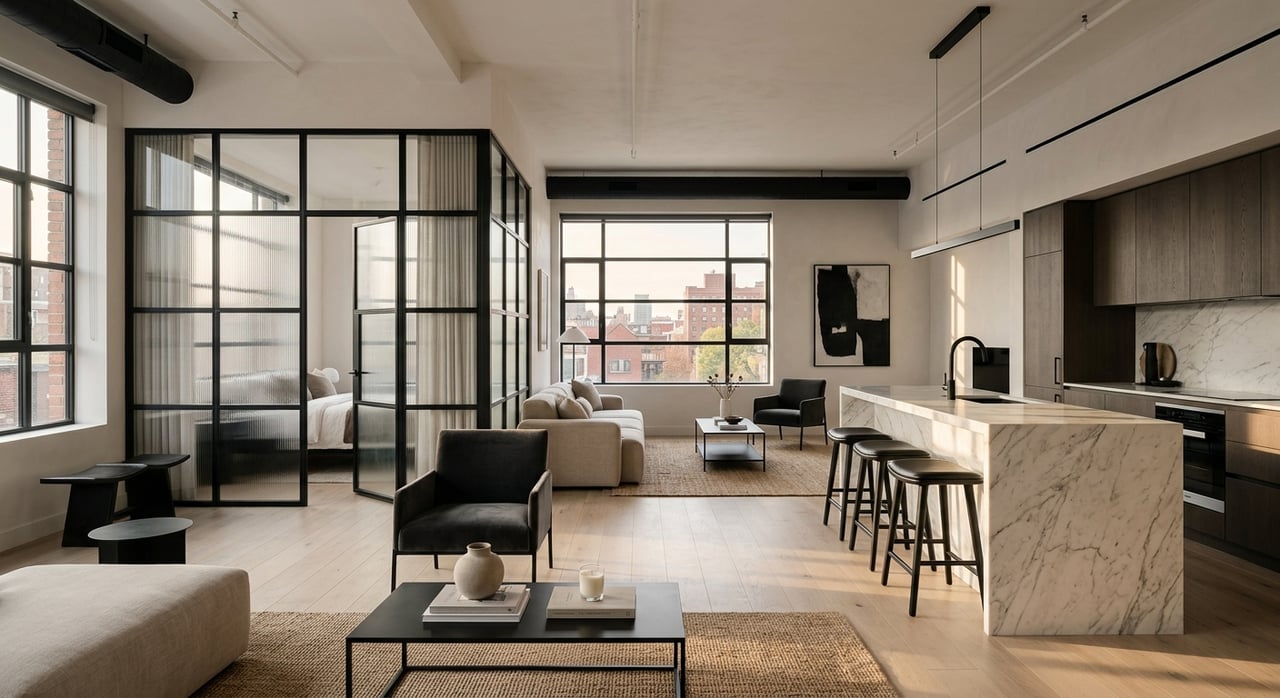
If you are selling a luxury loft or condo in Tribeca, pricing is not a detail you can set and forget. In a neighborhood where listings can range from classic warehouse conversions to amenity-rich condo towers, the right number has to reflect not just the market, but your building, your line, and your buyer pool. This guide will show you how to think about pricing in today’s Tribeca market so you can launch with clarity and protect your leverage. Let’s dive in.
Tribeca Pricing Starts High
Tribeca remains one of Manhattan’s premier apartment markets, but it is also a thin market with limited monthly sales volume. PropertyShark’s April 2026 report shows a median sale price of $3.4 million and a median price per square foot of $1,786, based on just 11 transactions. StreetEasy’s neighborhood page shows a $3.7 million median sale price and a median 60 days on market.
That combination matters. You are looking at a market with a high baseline and relatively few deals, which means one or two outlier sales can influence the picture quickly. In practical terms, broad neighborhood averages are useful context, but they are rarely enough to set an accurate asking price for a specific Tribeca home.
Manhattan Conditions Shape Tribeca Strategy
Tribeca does not operate in a vacuum. Across Manhattan in 2Q26, the co-op and condo market continued to move forward while inventory stayed tight. Jonathan Miller’s Housing Notes reported a record Manhattan median sale price of $1.25 million, an average price per square foot of $1,694, and listing inventory of 7,049, down 15% year over year.
The luxury tier was even tighter. In 2Q26, the top 10% of Manhattan apartment sales started at $4.45 million, the luxury median sale price was $6.4515 million, and luxury listing inventory fell to 796 units, the lowest level recorded in 22 years of tracking. For many Tribeca lofts and condos, that is the arena you are entering.
There is another detail worth watching. The only Manhattan price bands that showed annual sales growth in 2Q26 were $2 million to $3 million and $3 million to $4 million. That makes pricing just below the luxury cutoff especially important, because crossing above $4.45 million can place your home into a thinner buyer pool.
Building-Level Comps Matter Most
In Tribeca, pricing should start at the building level. Inventory can vary sharply from one address to another, even within the same neighborhood and price category. Current StreetEasy pages show 1 active sale at 443 Greenwich, 7 active sales at 93 Worth, 8 active sales at 101 Warren, and 13 active sales at 56 Leonard.
That spread tells you something important. A seller at a building with limited competing inventory may have more room to lead, while a seller in a building with several active listings has to think harder about how to stand out. Buyers often compare homes inside the same building first, then weigh alternatives nearby.
A sound pricing package usually follows this order:
- Same-building recent sales
- Same-building active competition
- Nearby comparable homes with similar size and finish
- Adjustments for views, floor height, outdoor space, and condition
This approach is more precise than leaning on a neighborhood median alone. In Tribeca, the market often rewards specificity.
Why Overpricing Costs More Here
Luxury sellers sometimes assume they can test the market with a high launch and adjust later. In Tribeca, that strategy can be expensive. The cost of overreaching is usually time first, then markdowns.
Recent listing histories make that clear. At 93 Worth, unit 1205 reached 143 days on market after a 5% price cut to $1.695 million. At 56 Leonard, unit 29A reached 153 days on market after a 7% cut to $7 million. River Lofts Tower unit 2J sold for $4.1 million after starting at $4.75 million and taking 74 days to reach contract.
These examples do not mean strong homes cannot sell well. They do show that even in desirable Tribeca buildings, buyers respond quickly when a listing misses the market. Once a home sits, the initial burst of attention fades, and sellers often give up more in price than they would have with a sharper launch.
Negotiation Is Still Part of the Market
Tight inventory does not mean buyers stop negotiating. At 101 Warren, recent sold units closed from 1.9% to 6.8% below ask. That suggests many buyers in this segment still expect room to negotiate, even in a respected building.
For sellers, that does not automatically mean you should build in a large pricing cushion. In fact, too much cushion can backfire if it pushes your listing out of the most active search range or invites a stale listing period. The better strategy is often to price close to market with a clear reason for every premium you are asking.
What Drives Loft Value in Tribeca
Not all square footage trades the same way in Tribeca. For lofts, the strongest premiums usually come from volume, light, and authenticity. The neighborhood is defined by cast-iron lofts, warehouse conversions, and architecturally distinctive residences, and renovated lofts can command some of the highest price-per-square-foot numbers in the city.
When buyers evaluate a loft, they often focus on qualities that are hard to replicate. Ceiling height, oversized windows, open span, original industrial character, and the quality of renovation all influence perceived value. A loft with strong natural light and a refined finish package may justify a meaningful premium over a similar-size home with less presence.
In practical terms, the key value drivers often include:
- Ceiling height and overall volume
- Window size and light exposure
- Authentic loft character
- Renovation quality and layout flow
- Floor height and view corridors
- Terrace or private outdoor space
These variables can shift pricing materially, even within the same building. Two homes with similar square footage may compete in very different ways once light, outlook, and finish level are taken into account.
What Drives Condo Value in Tribeca
For condos, the equation is slightly different. Buyers still care about light, views, and condition, but service, amenities, and monthly carrying costs can have a bigger effect on pricing. In Manhattan’s 2Q26 report, the average condo common charges plus real estate taxes totaled $4,466 per month.
That means your asking price cannot be evaluated in isolation. Buyers often underwrite the full monthly cost of ownership, especially in the luxury tier. If a condo has higher carrying costs, the list price may need to work harder to justify the package unless the building’s service level, amenities, layout, or views clearly support it.
Current Tribeca listings show how wide the spread can be. A one-bedroom at 93 Worth is asking $1,814 per square foot for 934 square feet with city and skyline views. A three-bedroom at 56 Leonard is asking $3,218 per square foot for 2,175 square feet with panoramic skyline and river views, floor-to-ceiling windows, high ceilings, and a terrace. At 443 Greenwich, the active penthouse spans 5,375 square feet with a 2,646-square-foot terrace and a private rooftop setting in a 53-unit building.
How to Price Near the Luxury Threshold
If your home is likely to trade near $4.45 million, pricing discipline becomes even more important. In 2Q26, that was the entry point for Manhattan’s top 10% luxury market. Crossing that line can shift your listing into a smaller, more selective buyer pool.
That does not mean you should always price below the threshold. It means you should make the decision deliberately. If your home has the views, scale, outdoor space, or building cachet to compete as a luxury listing, pricing into that tier may be justified. If it does not, a number just below the threshold may expose the property to more active demand.
This is where positioning matters as much as valuation. A strong pricing strategy is not just about the highest possible ask. It is about placing your home where the best buyers will engage quickly and seriously.
A Smarter Launch Strategy for Tribeca Sellers
A strong launch in Tribeca is usually measured, not flashy. The market tends to reward listings that arrive with a credible price, polished presentation, and a clear competitive story. Once your home is live, the first wave of buyer attention is one of your most valuable assets.
That is why pricing and presentation should work together from day one. If your loft or condo is entering a building with several active competitors, you need to know exactly how your home differs. If supply is low in your building, that advantage should be reflected carefully, not overstated.
Before launching, sellers should be able to answer a few core questions:
- Which same-building sales set the clearest baseline?
- How many active listings are buyers comparing against right now?
- Does the home sit above or below the $4.45 million luxury line?
- Which features truly justify a premium?
- Are monthly carrying costs helping or hurting the value story?
In a neighborhood as nuanced as Tribeca, the best pricing strategies are rarely generic. They are tailored, building-aware, and grounded in current buyer behavior.
If you are weighing when and how to bring a Tribeca loft or condo to market, a bespoke pricing analysis can help you protect momentum and negotiate from strength. New York Collaborative offers data-informed guidance, curated positioning, and white-glove support for high-value Manhattan listings.
FAQs
What is the current sale price baseline for Tribeca condos and lofts?
- Recent data places Tribeca’s median sale price in the mid-$3 million range, with PropertyShark reporting $3.4 million in April 2026 and StreetEasy showing $3.7 million on its neighborhood page.
Why do building-level comps matter for Tribeca pricing?
- Building-level comps matter because active inventory differs sharply by building in Tribeca, which can change buyer competition, absorption, and pricing power even within the same neighborhood.
What is the Manhattan luxury threshold that affects Tribeca pricing?
- In 2Q26, Manhattan’s top 10% luxury market began at $4.45 million, so homes priced near that point may enter a smaller and more selective buyer pool.
How much room do buyers expect to negotiate on Tribeca condos?
- Recent sales at 101 Warren closed between 1.9% and 6.8% below asking price, suggesting that negotiation remains part of the market.
What features add the most value to a Tribeca loft or condo?
- In Tribeca, value is often shaped by light, floor height, view corridors, outdoor space, renovation quality, and building cachet, with lofts also benefiting from volume and authentic industrial character.
Why are carrying costs important when pricing a Tribeca condo?
- Carrying costs matter because buyers evaluate the total monthly cost of ownership, and Manhattan’s 2Q26 average for condo common charges plus real estate taxes was $4,466 per month.
