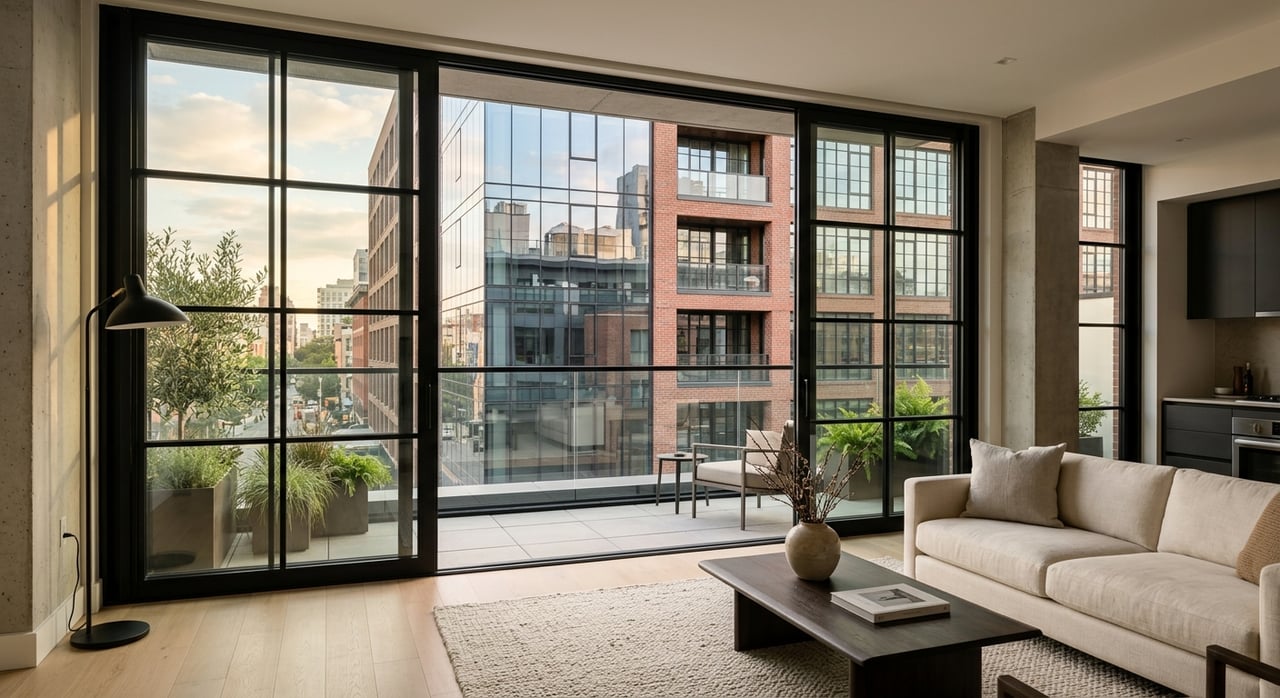
Luxury demand on Manhattan’s West Side is not being shaped by one neighborhood alone. It is being driven by a connected corridor where West Chelsea and Hudson Yards influence each other in real time through new development, office investment, public space, and buyer behavior. If you are buying, selling, or tracking high-end property in Chelsea, understanding that relationship can help you read pricing more clearly and make better decisions. Let’s dive in.
Why this corridor matters
West Chelsea and Hudson Yards work less like separate markets and more like a shared luxury ecosystem. That idea starts with planning and land use, not just recent headlines.
The West Chelsea rezoning approved in 2005 created the Special West Chelsea District and a High Line Transfer Corridor designed to preserve light, air, and view corridors along the rail line. That framework helped shape the built environment you see today, with a strong focus on design, access, and development rights.
Just north and west, Hudson Yards was built as a large mixed-use district on Manhattan’s Far West Side. According to the official Hudson Yards overview, the area includes roughly 18 million square feet of development, about 4,000 residences, more than 14 acres of public open space, over 100 shops and restaurants, cultural venues like The Shed and Edge, and an Equinox Hotel.
Together, these two areas now function as a continuous luxury zone. The zoning structure for the Special West Chelsea District, the scale of Hudson Yards, and the steady concentration of premium inventory all reinforce that connection.
Office growth supports housing demand
Residential demand does not exist in a vacuum, especially in a market like Manhattan. High-end housing often tracks with job concentration, corporate movement, and long-term investment in the surrounding district.
That backdrop remains strong on the West Side. Colliers reported that the largest share of post-2011 office leasing activity in the first half of 2025 landed in the Hudson Yards/Manhattan West submarket. The same report noted major momentum from projects such as 70 Hudson Yards and Deloitte’s commitment of more than 800,000 square feet.
For buyers and sellers, that matters because office investment can help reinforce the area’s long-term profile. It supports daytime activity, tenant demand, and buyer confidence in the corridor’s staying power.
Hudson Yards sets the luxury headline
If you look only at price rankings, Hudson Yards grabs immediate attention. It has consistently ranked among the city’s most expensive areas, and in 2025 it held the top spot.
PropertyShark’s 2025 neighborhood rankings placed Hudson Yards at No. 1 in New York City with a median sale price of $5.58 million, even after a year-over-year decline. In Q3 2025, it still ranked first at $4.99 million, with pricing supported by sales at 35 Hudson Yards and 15 Hudson Yards.
By January 2026, Hudson Yards recorded a median sale price of $5.7 million and a median price per square foot of $2,053, but with only three transactions. That low transaction count is important. In a trophy-heavy market, a few large closings can move the median quickly.
So yes, Hudson Yards is defining the top end of the corridor. But the headline number does not always tell the full story.
Chelsea offers a wider pricing range
Chelsea is broader, more varied, and less uniform than Hudson Yards. That gives the neighborhood a different pricing profile, even while it participates in the same luxury demand corridor.
In February 2026, Chelsea’s market data showed an overall median sale price of $1.7 million across 79 transactions. Within that same market, condos posted a median sale price of $3.3 million, while co-ops came in at $840,000.
That spread matters. Chelsea includes new luxury condominiums, boutique buildings, older co-ops, and resale inventory at different price points. Because of that mix, the neighborhood median can look much lower than Hudson Yards even when top-tier Chelsea product is competing for the same luxury buyer.
PropertyShark also noted that Chelsea’s Q1 2025 median-price drop was driven by a larger share of smaller units sold. That is a useful reminder that neighborhood medians often reflect product mix as much as pure demand.
New development is reshaping Chelsea
One of the biggest reasons this corridor continues to pull luxury demand is the steady flow of newer, amenity-rich inventory. That trend is especially visible in Chelsea.
According to MNS’s 3Q23 new development report, Chelsea/Hudson Yards accounted for 26.75% of Manhattan sponsor sales, with 107 closings led by 300 West 30th Street, 35 Hudson Yards, and 555 West 22nd Street. The submarket also absorbed the majority of one-bedroom, two-bedroom, and three-bedroom-plus sponsor sales that quarter.
In MNS’s 2Q24 report, Chelsea new-development sponsor sales posted a median price of $4.36 million and a median price per square foot of $2,567. There were 42 units sold, representing 11.67% of borough-wide sponsor sales.
At the building level, the luxury concentration becomes even clearer. 6sqft reported that One High Line at 500 West 18th Street recorded 34 closings and $202.76 million in aggregate sales in 2025, with an average closing price of $5.96 million. In the same report, 35 Hudson Yards logged 22 closings totaling $166.5 million, with an average closing price of $7.57 million.
The pipeline also continues. The same 6sqft report said 550 West 21st Street in West Chelsea is expected to bring 83 residences starting at $2.5 million, with sales launching in 2026 and completion expected in late 2027.
What buyers should watch now
If you are shopping in this part of Manhattan, the biggest mistake is comparing only neighborhood medians. In this corridor, building quality, amenities, views, layout, and exact location often matter more than the zip code label.
A newer condo in West Chelsea may compete more directly with Hudson Yards inventory than with a classic Chelsea co-op a few blocks away. Likewise, a trophy sale in Hudson Yards can distort the median without telling you much about value in a different building type.
A more useful buyer strategy is to compare:
- Building age and finish level
- Service and amenity package
- Floor height and exposure
- View corridors and privacy
- Recent same-building and nearby-building comps
- Price per square foot within the immediate competitive set
That approach is especially relevant because Manhattan’s broader luxury market remains active. In Elliman’s Manhattan Q2 2025 report, the top 10% of sales had a median price of $6.525 million, while new-development sales posted a median of $2.311 million and an average price per square foot of $2,465.
What sellers should take from this
For sellers, the corridor’s strength is real, but pricing still needs precision. You cannot simply anchor to the highest Hudson Yards number and expect the market to follow.
In Chelsea especially, the right comp set is often your immediate building cluster, not the neighborhood-wide median. A full-service condo near the High Line may need to be benchmarked against other premium new-development or recent-construction properties, while an older co-op should be priced within a very different competitive lane.
Presentation also matters more in this segment. As inventory grows more design-forward and amenity-rich, buyers at the upper end tend to focus closely on finish quality, light, layout efficiency, and how a home lives day to day.
The buyer pool is leaning affluent and flexible
The way buyers transact in Manhattan also helps explain demand in West Chelsea and Hudson Yards. At the high end, cash and entity purchases remain an important part of the story.
PropertyShark’s 2025 buyer study found that 60% of Manhattan sales in the first five months of 2025 closed without financing. The report also found that cash dominated deals above $5 million and that LLCs accounted for 11.35% of NYC purchases, with Manhattan responsible for nearly half of all entity-structured deals citywide.
The same study reported that 87% of NYC buyers were local, while out-of-state demand came mainly from New Jersey, California, and Florida. In a corridor like West Chelsea and Hudson Yards, that points to a buyer pool that often includes affluent local move-up buyers, pied-à-terre purchasers, and privacy-minded buyers who are comfortable with cash or LLC ownership.
Why the corridor should stay important
West Chelsea and Hudson Yards continue to shape luxury demand because they bring together several forces at once. You have a planning framework that enabled major transformation, a concentration of new high-end product, strong amenity density, and ongoing office investment nearby.
You also have a market with depth. Hudson Yards produces headline-grabbing trophy sales, while Chelsea offers a broader ladder of entry points across condos and co-ops, with newer West Chelsea product increasingly pulling toward the luxury tier.
For many buyers, that creates options within one connected part of Manhattan. For sellers, it creates opportunity, but only if pricing and positioning reflect the true competitive landscape.
If you are weighing a purchase, sale, or investment in this market, a building-by-building strategy is often the clearest path forward. For tailored guidance on luxury resale, new development, and West Side market positioning, connect with New York Collaborative.
FAQs
How are West Chelsea and Hudson Yards connected in the luxury market?
- West Chelsea and Hudson Yards function as a connected luxury corridor because of coordinated planning, dense amenities, new development, and continued office investment on Manhattan’s West Side.
Why is Hudson Yards more expensive than Chelsea on paper?
- Hudson Yards has a smaller, more trophy-heavy housing stock, so a few high-end closings can push neighborhood medians much higher than Chelsea’s broader and more varied housing mix.
What does Chelsea pricing include compared with Hudson Yards?
- Chelsea pricing includes a wider range of condos, co-ops, and resale inventory, while Hudson Yards tends to skew more heavily toward newer luxury condominiums.
What should buyers compare in West Chelsea and Hudson Yards?
- Buyers should compare individual buildings, amenities, views, recent comps, and price per square foot rather than relying only on neighborhood median sale prices.
What do current buyer trends suggest about luxury demand in Manhattan?
- Current data suggest that affluent buyers, especially cash buyers and entity purchasers, remain active in Manhattan’s high-end market, including the West Chelsea and Hudson Yards corridor.
