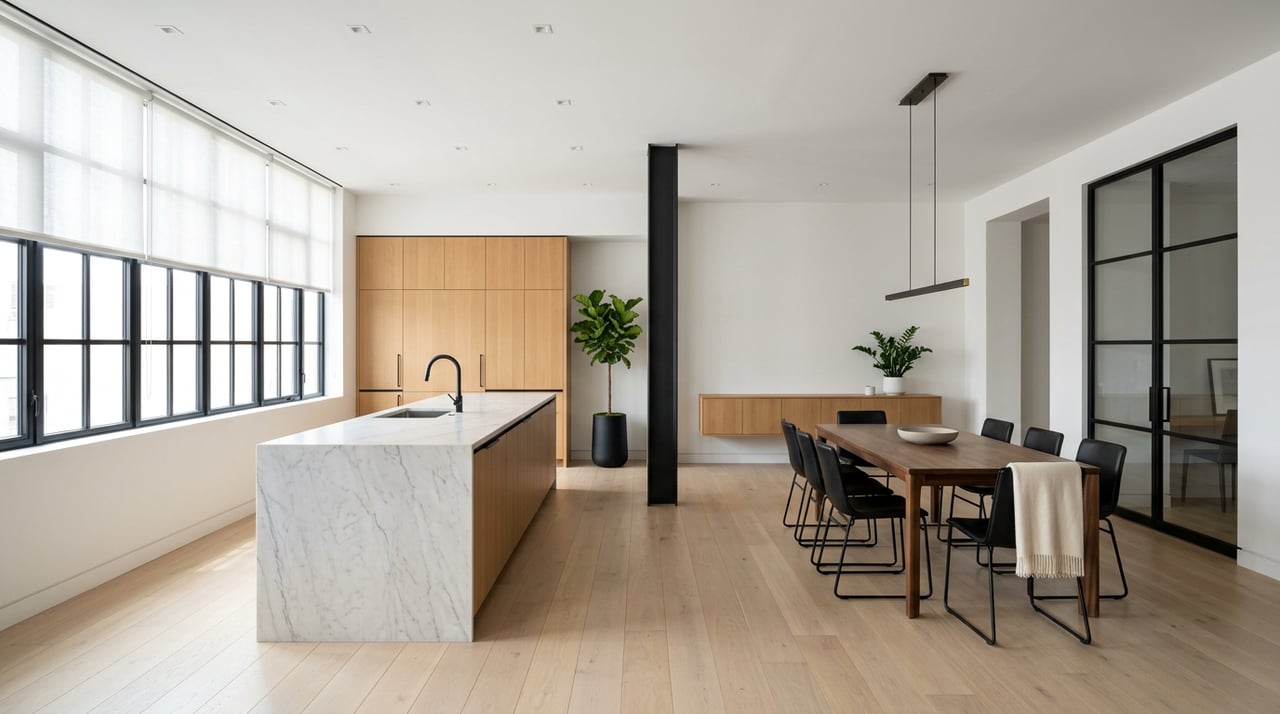
Ready to sell your Tribeca loft for a standout result? In a neighborhood where a handful of listings can reset comps, how you prepare, present, and distribute your home has a direct impact on price and time on market. As of January 2026, Tribeca’s median sale price hovered around $3.8 million with a median price per square foot near $2,000 to $2,100, underscoring how scarce, high-value inventory performs when it is marketed well. You will learn exactly how to position your loft so buyers see the scale, lifestyle, and quality that drive premium offers. Let’s dive in.
Know your buyer and market
Tribeca attracts design-focused, privacy-minded buyers who respond to quality and story. The sales pool is small and high-dollar, which means presentation can shift outcomes more than in broader markets. Neighborhood-level data shows a median sale price near $3.8 million and a median price per square foot around $2,000 to $2,100, reinforcing the premium nature of the area and the importance of polished positioning. See the current neighborhood metrics on PropertyShark’s Tribeca market trends.
In Manhattan’s luxury tier, cash remains common. Recent analysis indicates that cash buyers account for more than 60 percent of transactions at the high end. That audience expects move-in quality, strong media, and clear lifestyle framing. Review the luxury segment context in the Miller Samuel Manhattan market report.
Prepare with precision
Pre-list technical checks
Start with function. Address leaking windows, HVAC issues, electrical concerns, or visible roof and terrace defects before you stage or shoot media. In the luxury segment, buyers often complete quick technical diligence and discount for unresolved items. Handling small but meaningful fixes upfront avoids renegotiation later and keeps your leverage strong.
Targeted staging for loft scale
In an open-plan loft, buyers need help visualizing zones and flow. Use staging to define living, dining, and work areas while leaving some negative space to showcase volume and ceiling height. The National Association of Realtors reports that staging helps buyers visualize a property, often reduces time on market, and can increase perceived value, with agents citing uplifts from 1 to 10 percent in some cases. Explore the data in NAR’s Profile of Home Staging.
Focus first on the living room, primary bedroom, and kitchen. Opt for high-end but neutral furnishings and art that read aspirational without locking you into a narrow buyer profile. Thoughtful lighting and textural accents help the camera read the space with clarity.
Cosmetic upgrades that matter
Prioritize improvements that buyers notice every day. Refresh worn finishes, tune up kitchen hardware, and update bath fixtures where dated. Upgrade lighting to articulate ceiling height and highlight architectural details. In luxury listings, quality finishes return value, but they cannot hide unresolved functional friction.
Craft an elevated media package
Must-have assets for a Tribeca loft
- Professional still photography with wide shots that convey scale, plus detail images of brick, beams, millwork, and key materials.
- A floor plan with accurate square footage and clear labels buyers and appraisers can trust.
- A Matterport or high-quality 3D tour to illustrate openness, circulation, and proportions.
- A short cinematic video walkthrough, plus vertical social edits for discovery.
- A twilight or façade image if views, outdoor space, or architecture are differentiators.
- A dedicated single-property landing page and a concise PDF property book for showings and press.
Why these assets move the needle
Photos are often the first filter buyers use online, and poor imagery can eliminate interest before a showing. NAR consistently highlights the central role of photos in discovery and evaluation, as summarized in its staging and online features report. Lofts are spatially complex, which makes 3D tours and floor plans essential for out-of-market and time-pressed buyers. Vendor and industry case studies show that immersive tours correlate with higher engagement and faster sales in layout-driven properties. Learn more about 3D-tour impact in HomeJab’s guide to virtual tours.
Video and social clips extend reach to younger, tech-forward and international buyers while creating a shareable narrative around lifestyle. Luxury marketing guidance emphasizes polished, targeted digital assets paired with curated outreach. See best practices in Inman’s luxury marketing handbook.
Production plan and deliverables
- Shoot after staging is complete and the home is spotless. Book one production day to capture stills, 3D, and video. Capture twilight separately if needed.
- Hire a photographer and videographer experienced with loft volume and verticals to avoid distortion.
- Request color-corrected HDR images, high-resolution files for print, 2:1 and 4:5 social crops, unbranded and branded 3D links, and raw clips for social edits.
Messaging that sells the lifestyle
Your copy and captions should translate architecture into daily life. Lead with signature loft assets such as soaring ceilings, oversized industrial windows, full-floor layouts, private elevator access, and chef-level kitchens. Tie each feature to a lived benefit, for example: “12-foot ceilings create gallery-scale walls for large art,” or “a 30-foot great room frames south light for effortless entertaining.”
Lifestyle hooks that resonate in Tribeca include proximity to downtown dining and arts, flexible live-work potential, privacy, and family-friendly layouts. Keep language neutral and inclusive. Avoid value judgments about schools or specific groups. Instead, point to space planning, storage, and quiet zones that help a range of buyers imagine their life at home.
Distribution that reaches the right buyers
A premium result requires both wide exposure and curated access.
- MLS syndication and major portals establish baseline visibility, but do not stop there.
- Invite a short list of top Manhattan buyer agents to a midweek broker preview and one or two private tours. A personal call sheet to your top 20 brokers often yields early traction.
- Use targeted digital ads to reach feeder markets such as nearby suburbs, coastal hubs, and select international centers. Pair those with polished collateral for offline follow-up.
- Pitch to NYC-focused real estate columns and design press using high-quality images and a succinct property brief. Editorial placement can create third-party validation and urgency.
- For ultra-luxury listings, leverage an international brokerage network to syndicate globally and engage referral partners. This blend mirrors best practices outlined in Inman’s luxury marketing guidance.
Event strategy matters, too. Host one weekend open by appointment for vetted buyers to create access while maintaining control. For very high-profile properties, consider a private reception with discretion.
Pricing and negotiation in Tribeca
Start with a comps-driven price-per-square-foot band, then adjust for floor height, volume, private outdoor space, and finish level. Neighborhood medians offer context, but building and line-level comps carry more weight. Use recent transactions and PPSF trends from PropertyShark’s Tribeca market data to build a six to twelve-month comparable set.
Expect a deliberate buyer pool and be ready to respond quickly to qualified interest. Ask for proof of funds or pre-approval with offers. When activity is strong, consider structured windows for best-and-final and escalation language to preserve leverage. Always consult your attorney for clause drafting and compliance.
If your building is a co-op, clarify board requirements and prepare documentation early, since packages and interviews can add time. Condos generally allow faster closings and appeal to a broader set of domestic and international buyers. Align timing and expectations accordingly.
Timeline and budget blueprint
A full luxury campaign typically benefits from six to eight weeks of pre-market work.
- Weeks −8 to −6: Complete technical repairs. Order necessary building documents and confirm marketing permissions.
- Weeks −6 to −4: Stage priority rooms and finalize a staging photography plan. Book your photo, video, and 3D vendors. NAR reports the median cost for professional staging services around $1,500, with agent-handled staging around $500, though larger lofts may run higher. See NAR’s staging profile.
- Weeks −4 to −3: Capture media, deliver edits, and assemble your single-property page and a concise property book.
- Weeks −2 to 0: Host a broker preview, begin targeted outreach, and launch on MLS with the complete media set.
Indicative marketing budgets vary by scope and scale:
- Professional photography: $500 to $2,000
- 3D tour: $300 to $1,200
- Cinematic video: $800 to $3,500
- Partial staging: Typically around $1,500 median for services, higher for large lofts
Seller’s quick checklist
- Confirm current neighborhood context and PPSF benchmarks using a reliable market source.
- Complete a pre-list audit: mechanicals, electrical, windows, roof or terrace, building documentation.
- Stage the living room, primary bedroom, and kitchen. Define zones and reserve some open space.
- Commission professional media: stills, floor plan, 3D tour, short video, landing page, property book.
- Execute a distribution plan: MLS, broker preview, targeted digital, PR, and international network.
- Prepare to negotiate: proof of funds or pre-approval ready, attorney engaged, co-op package prepped if applicable.
Common mistakes to avoid
- Skipping repairs that buyers will discover and discount during diligence.
- Under-staging an open plan so rooms feel undefined or smaller than they are.
- Leaning on phone photos or incomplete media that limit showings.
- Pricing without a PPSF framework or without adjusting for volume, floor, and finish quality.
- Relying only on passive syndication instead of curated broker outreach and targeted ads.
Positioning your Tribeca loft for maximum impact is about precision. When you align preparation, elevated media, and smart distribution with a comps-driven strategy, you invite the right buyers and protect your price. If you want a bespoke plan tailored to your timeline and asset, connect with the team at New York Collaborative for a discreet, data-informed consultation.
FAQs
How long does it take to prep a Tribeca loft for market?
- Most luxury campaigns benefit from six to eight weeks of prep to handle repairs, staging, media, and outreach, which helps you launch with full leverage and minimal surprises.
What staging delivers the best ROI in an open-plan loft?
- Define zones in the living area, primary suite, and kitchen with high-quality but neutral furnishings, and leave some negative space so volume and ceiling height read clearly in photos and tours.
Which media asset has the biggest impact for luxury loft buyers?
- Professional photos are the primary discovery filter, while floor plans and 3D tours help buyers understand flow and scale, often increasing qualified engagement and reducing unnecessary showings.
How should I price a unique full-floor Tribeca loft?
- Start with recent building and line-level PPSF comps, then adjust for ceiling height, private outdoor space, exposure, finish level, and uniqueness, recognizing that lifestyle and volume often command premiums.
What is different about selling a Tribeca co-op versus a condo?
- Condos typically allow faster closings and appeal to a wider set of buyers, while co-ops require board approval and detailed packages that can extend timelines, so prepare documentation early.
Do I still need video if I have a 3D tour?
- Yes. A short cinematic video and vertical social edits expand reach, tell a lifestyle story, and capture buyers who discover homes on social platforms, complementing the detail provided by a 3D tour.
