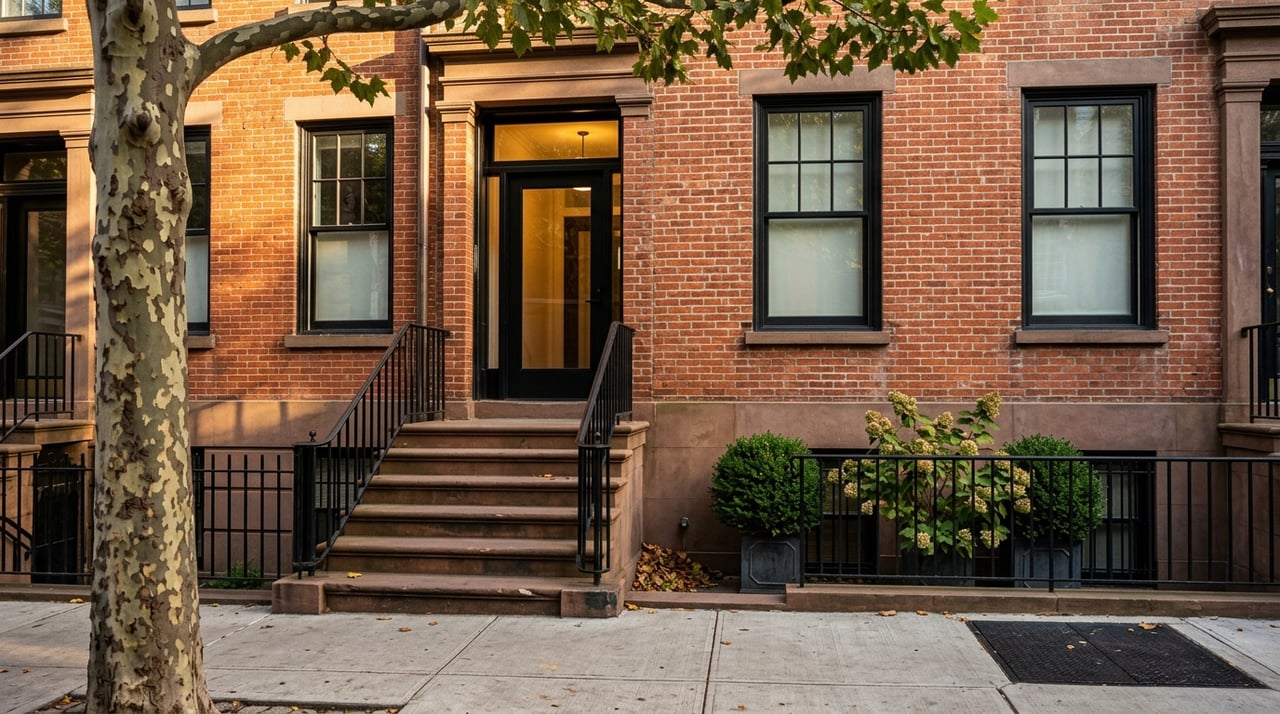
What does everyday life in Cobble Hill actually feel like once the weekend buzz fades and your routine takes over? For many buyers, that question matters more than any single restaurant or headline address. If you are trying to picture mornings, errands, park time, and the pace of the blocks between Court Street and Cobble Hill Park, this guide will help you do exactly that. Let’s dive in.
Cobble Hill Feels Intentionally Human-Scale
Cobble Hill stands out because it feels low-rise, residential, and settled into its own rhythm. The neighborhood sits within Brooklyn Community District 6, an area NYC Planning profiled with 113,933 residents and 49,623 occupied housing units in 2020, which supports the sense that this is a built-out part of Brooklyn rather than a neighborhood defined by rapid expansion.
That physical character is closely tied to preservation. The core Cobble Hill Historic District was designated in 1969, with an extension added in 1988, and the district includes hundreds of buildings dating from the 1830s to the 1920s. Landmark protections and a 50-foot height limit have helped preserve the neighborhood’s historic scale, tree-lined streets, and rows of architecturally notable homes.
For you as a buyer, that means the setting often reads as classic Brooklyn rather than vertical Brooklyn. The blocks feel more intimate, and the streetscape tends to support walking, lingering, and repeating the same local routes day after day.
Court Street Anchors Daily Life
If Cobble Hill has a practical spine, it is Court Street. This is where everyday life becomes easy to picture, with a mix of grocery options, food stops, wellness businesses, home-focused retail, and neighborhood services that support routines instead of one-off visits.
The current local business mix listed by the Cobble Hill Association includes places such as Fish Tales seafood market, Duman Home, Saturn Road, SLT Cobble Hill, Studio Pilates Cobble Hill, Melissa Joy Manning, Long Island Bar, and 16 Handles. Taken together, that points to a corridor shaped by daily convenience and small-format shopping rather than large retail footprints.
Trader Joe’s at 130 Court Street adds an important layer to that pattern. You can combine a standard grocery run with nearby independent storefronts, which makes the area feel practical as well as charming.
For many residents, that convenience shapes the neighborhood more than any single destination does. You are not planning your day around leaving Cobble Hill for the basics. In many cases, the basics are already built into the walk.
What the Errand Loop Looks Like
A typical daily loop here may be simple by design. You step out for coffee, stop for groceries or specialty items on Court Street, and continue on foot through low-rise residential blocks before heading toward the park or back home.
That ease matters because it changes how a neighborhood lives. When errands fit naturally into a short walk, your surroundings become part of your routine instead of a backdrop you rush through.
Smith Street Extends the Rhythm
Court Street is central, but it is not the whole story. Smith Street adds to the same walkable pattern and helps widen the neighborhood’s day-to-day activity beyond a single corridor.
The Cobble Hill Association notes that the Smith Street Fair spans eight blocks from Union Street to Bergen Street and features food, drink, crafts, and clothing. That is useful not only as an event detail, but also as a clue to the scale of local retail life.
In other words, Cobble Hill is not organized around one major commercial destination. It functions through connected, human-scale streets where shopping, dining, and neighborhood activity spill naturally across nearby blocks.
Cobble Hill Park Supports the Everyday
Cobble Hill Park is best understood as a routine amenity, not a large recreation destination. NYC Parks lists it as a 0.59-acre small park and playground at Congress Street, Clinton Street, and Verandah Place, and the city’s location materials describe it as a calm setting with 19th-century period materials.
That combination says a lot about how the park fits into daily life. It is the kind of place where you might pause on a bench, bring children to the playground, meet a neighbor, or add a green break to your walk.
For buyers comparing neighborhoods, this is an important distinction. Cobble Hill Park does not dominate the neighborhood, but it contributes to the feeling that even a compact piece of green space can become central when it is woven into your everyday route.
Why Small Green Space Matters
In a dense city setting, a pocket park can do more than its size suggests. It creates breathing room, offers visual relief from the street, and gives your routine a place to slow down.
That fits Cobble Hill especially well. The neighborhood’s appeal is often found in repeated moments, not oversized attractions.
Transit Stays Close to the Routine
Although Cobble Hill feels residential, transit remains part of the neighborhood’s practical appeal. MTA neighborhood maps show nearby F and G service at Bergen Street, Carroll Street, and Smith-9 Streets, reinforcing that subway access is built into daily mobility.
For you, that means the neighborhood can feel tucked in without feeling disconnected. You get a quieter streetscape than some denser retail corridors, while still maintaining straightforward access to surrounding parts of Brooklyn.
This balance is part of what gives Cobble Hill its village-like reputation within the city. The neighborhood feels local in scale, but it is still tied into the broader network that keeps New York moving.
School Context in Cobble Hill
If school planning is part of your move, Cobble Hill sits within NYC public school District 15. The NYC Department of Education district map places the neighborhood there, and DOE school pages identify nearby options including Cobble Hill School of American Studies at 347 Baltic Street and Success Academy Charter School - Cobble Hill at 284 Baltic Street.
The most useful takeaway is straightforward. If you are evaluating the neighborhood as part of a larger housing decision, you can factor in that Cobble Hill is part of an established Brooklyn school district and review specific options as part of your own search process.
What Buyers Should Know About Historic District Rules
Cobble Hill’s preserved character comes with real ownership considerations. In the historic district, exterior changes generally require review and approval through the Landmarks Preservation Commission, and designation reports help guide how future alterations are regulated.
That does not make ownership harder by default, but it does make it more specific. If you are considering a townhouse or another property within the district, it is important to understand that façade work and exterior renovations may involve more process than they would in a non-landmarked area.
For many buyers, that tradeoff is part of the value proposition. The same rules that can add steps to renovations also help maintain the streetscape and the architectural consistency that define Cobble Hill’s appeal.
Why Cobble Hill Appeals to Buyers
Cobble Hill is compelling because it offers a version of Brooklyn living shaped by proportion, routine, and preservation. You have low-rise blocks, walkable retail, a neighborhood park woven into daily life, and transit that remains close at hand.
For townhouse buyers and buyers seeking a more intimate residential setting, that combination can feel especially attractive. The neighborhood does not rely on spectacle. Its value is in how consistently livable it feels from one day to the next.
If you are exploring Cobble Hill as part of a broader Brooklyn or Manhattan search, the key question is not just what is here, but how it all works together. In Cobble Hill, the answer is often found in the ease of the everyday.
If you are considering a townhouse, condo, or curated Brooklyn opportunity and want a more tailored view of how Cobble Hill compares with your other options, New York Collaborative can help you navigate the search with discretion, clarity, and market insight.
FAQs
What is everyday life like in Cobble Hill?
- Everyday life in Cobble Hill centers on walkable routines, with Court Street serving as a practical corridor for groceries, dining, wellness, and small retail, plus easy access to Cobble Hill Park and nearby subway service.
Where is the Cobble Hill Historic District?
- The core historic district is roughly bounded by Atlantic Avenue, Degraw Street, Hicks Street, and Court Street, with landmark protections that help preserve the neighborhood’s low-rise historic character.
What is Cobble Hill Park used for?
- Cobble Hill Park is a 0.59-acre small park and playground that is best suited to sitting, strolling, meeting neighbors, or bringing children to the playground rather than large-scale recreation.
What grocery options are near Court Street in Cobble Hill?
- Court Street includes a Trader Joe’s at 130 Court Street, along with nearby independent businesses that support everyday errands and neighborhood shopping.
What subway access serves Cobble Hill?
- Nearby F and G subway access includes Bergen Street, Carroll Street, and Smith-9 Streets, according to MTA neighborhood maps.
What should buyers know about owning in Cobble Hill’s historic district?
- Buyers should know that exterior changes within the historic district generally require Landmarks Preservation Commission review, which can add process to façade work or renovations.
What school district is Cobble Hill in?
- Cobble Hill is in NYC public school District 15, and nearby DOE-listed options include Cobble Hill School of American Studies and Success Academy Charter School - Cobble Hill.
