If you are trying to make sense of Tribeca right now, the headline is simple: this is still one of Manhattan’s most expensive and closely watched luxury markets, but it is not a market that rewards guesswork. Whether you are buying a loft or preparing to sell a high-end condo, you need a clear read on pricing, inventory, and negotiating leverage. This guide breaks down what today’s numbers mean for buyers and sellers in Tribeca, and how to approach the market with more confidence. Let’s dive in.
Tribeca Still Sits at the Top
Tribeca remains firmly in Manhattan’s ultra-prime tier. In PropertyShark’s Q1 2026 report, the neighborhood posted a median sale price of $4.25 million, up 29% year over year, with 70 sales compared with 69 the year before. In Q2 2025, Tribeca ranked as the city’s second-priciest neighborhood, with a median sale price of $4.15 million.
That context matters because it shows this is not a one-off spike. Even when nearby downtown neighborhoods post strong numbers, Tribeca continues to trade at a premium. In Q1 2026, SoHo came in lower at $3.24 million, while Hudson Square was just under $3 million.
Why Tribeca Can Feel Hard to Read
Tribeca is a thinly traded market. That means a small number of deals can shape the monthly picture more than they would in a higher-volume neighborhood. PropertyShark’s April 2026 data showed just 11 transactions, down 70.3% from a year earlier, with a median sale price of $3.4 million.
When deal volume is that limited, buyers and sellers should avoid overreacting to one month of numbers. A trophy closing, an unusually large loft, or a quiet month can all skew the snapshot. The smarter move is to look at recent closed sales, current asking inventory, and the specific product type you are targeting.
Current Inventory in Tribeca
As of March 2026, Realtor.com reported 177 homes for sale in Tribeca and 199 rentals. For-sale inventory was down 22.56% year over year, while rental inventory was down 33.23%. That tells you supply is not overflowing, even with a meaningful number of listings on the market.
Compared with nearby downtown areas, Tribeca offers substantial inventory, but not deep inventory by luxury-market standards. It had more listings than SoHo’s 164, but fewer than the West Village’s 206. For buyers, that means there is choice, but not endless choice. For sellers, it means competition is real, and presentation still matters.
What Is Actually Selling in Tribeca
Tribeca’s market is currently condo-led. In April 2026, condos made up 9 of the neighborhood’s 11 sales, and the condo median sale price was also $3.4 million. Earlier data from Q2 2025 showed that nearly 80% of Tribeca sales were condos, with a condo median sale price of $4.35 million.
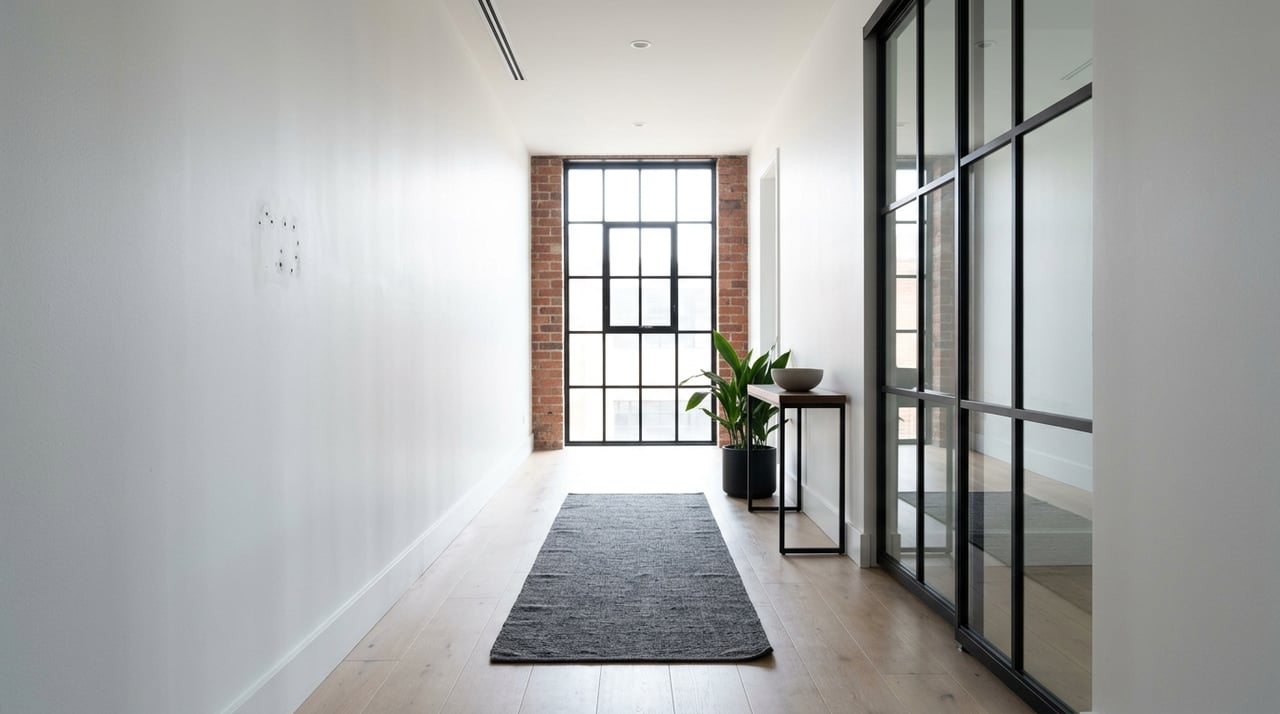
That said, product type still matters a great deal here. Tribeca is known for its mix of converted warehouse lofts, cast-iron buildings, and newer luxury towers. Two homes with similar square footage can perform very differently based on ceiling height, natural light, layout, building reputation, and renovation quality.
Tribeca Price Per Square Foot
If you want a practical pricing lens, price per square foot is one of the most useful starting points. PropertyShark’s April 2026 data showed a median closed-sale price per square foot of $1,786. Realtor.com’s March 2026 snapshot showed a median list-price per square foot of $2,300.
That gap tells an important story. Sellers are still aiming high, but completed deals are generally landing below ask. For many resale properties, a realistic range appears to sit in the high-$1,000s to low-$2,000s per square foot, while standout lofts and trophy condos can move well above $3,000 per square foot.
Live listings help show how wide the range can be. One example cited in the market sample was 80 Chambers Street #15A at about $1,500 per square foot, while 32 Walker Street #2 was asking roughly $3,400 per square foot. In Tribeca, average pricing only tells part of the story because the spread between good, great, and exceptional product is so wide.
What Buyers Should Budget For
For many buyers, a credible Tribeca search starts in the low-to-mid $3 million range. That is where you may begin to find viable condo or loft options in the current market. As you move toward better locations, larger footprints, stronger building profiles, and more turnkey finishes, the market more often shifts into the $4 million to $5 million-plus range.
At the top end, pricing can climb quickly. Full-floor lofts, penthouses, and highly polished homes with exceptional light or outdoor space can trade far above neighborhood medians. That is why budget planning in Tribeca works best when it is tied to your target property type, not just a headline neighborhood number.
Budgeting by Product, Not Just Address
If you are buying in Tribeca, it helps to think in tiers:
- Entry luxury: often starts in the low-to-mid $3 million range for credible options
- Core luxury: many well-located, larger, or updated homes sit in the $4 million to $5 million-plus band
- Trophy segment: exceptional lofts, penthouses, and rare offerings can rise well beyond that
A loft in a coveted historic building and a condo in a newer full-service tower may both be in Tribeca, but they do not always trade by the same logic. Your search becomes much more efficient when you narrow the building style, finish level, and layout priorities early.
How Fast Homes Are Moving
In March 2026, Tribeca’s median days on market was 68 days. That was slower than Greenwich Village, West Village, Financial District, SoHo, and Hudson Square, but faster than NoHo and Chinatown. In other words, Tribeca is active, but not especially fast by downtown luxury standards.
That creates a more balanced environment than many buyers expect. Well-priced homes can still attract strong attention, but listings do not usually vanish overnight just because they are in Tribeca. Buyers often have time to evaluate the details, while sellers need to expect a market that rewards precision rather than urgency alone.
How Much Negotiating Room Exists
Tribeca’s average sale-to-list ratio was 95% in March 2026. That is solid performance, especially for a luxury market, but it also means buyers are often closing around 4% to 5% below asking. SoHo averaged 94%, while West Village and Financial District were at 96%.
For buyers, that suggests there may be room to negotiate, especially when a property is overpriced, needs updates, or has lingered on the market. For sellers, it is a reminder that aspirational pricing can backfire. The market is still premium, but it is also price-sensitive.
What This Means for Buyers
If you are buying in Tribeca, you are entering a market with prestige, limited supply, and meaningful pricing variation. The key is to separate broad neighborhood data from property-specific value. A renovated condo with strong services, a classic loft with authentic volume, and a highly designed trophy residence may all sit within the same few blocks, but they attract different buyers and price differently.
You also need to read leverage correctly. Tribeca is not a distress market, and strong homes still command attention. But with average closings below list and a median time on market of 68 days, buyers often have an opportunity to negotiate thoughtfully, especially when they are guided by recent comparable sales instead of list-price psychology.
Smart Buyer Priorities in Tribeca
- Compare current asking prices with the most recent closed sales
- Watch price per square foot, but adjust for light, ceiling height, and condition
- Treat lofts and newer condos as separate categories when evaluating value
- Expect better homes to command a premium even in a negotiable market
- Build your search around your real use case, not just the neighborhood name
What This Means for Sellers
If you are selling in Tribeca, the market still supports premium pricing, but only when that pricing is grounded in current reality. Inventory is down year over year, which helps support values, yet buyers are not blindly paying any number. Completed deals are still closing modestly below ask.
That puts pressure on strategy. The strongest listings are the ones that launch with a sharp pricing plan, high-level presentation, and a clear understanding of where the property fits within the neighborhood’s current product mix. In Tribeca, buyers are not just buying square footage. They are also paying for light, ceiling height, layout efficiency, building cachet, and finish quality.
What Helps a Tribeca Listing Compete
- Pricing from recent sold comps, not the highest headline sale
- Strong visual presentation and polished property storytelling
- Clear positioning within the loft, condo, or trophy segment
- Attention to layout flow, condition, and how the home shows
- A negotiation strategy that reflects today’s 95% sale-to-list environment
For many luxury sellers, this is where boutique attention and broad exposure matter most. In a market with fewer deals and more nuance, thoughtful positioning can shape the outcome as much as the asset itself.
The Bottom Line on Tribeca Luxury
Tribeca remains one of Manhattan’s most expensive and distinctive neighborhoods, with median sale pricing that keeps it in the city’s top tier. At the same time, it is a thin market with modest negotiating room, a condo-heavy sales mix, and wide variation in pricing based on product quality. Buyers need discipline, and sellers need precision.
If you are planning a move in Tribeca, the goal is not just to know the neighborhood average. It is to understand where your property or purchase fits inside a market where details carry real financial weight. That is where careful analysis, sharp positioning, and experienced guidance make the difference.
If you want a tailored read on Tribeca pricing, positioning, or next steps, New York Collaborative can help you request a bespoke Manhattan market consultation.
FAQs
What is the current luxury market like in Tribeca?
- Tribeca remains one of Manhattan’s highest-priced neighborhoods, with a Q1 2026 median sale price of $4.25 million, but it is also a thin market where a small number of deals can shape short-term trends.
What is the typical price per square foot for Tribeca homes?
- Recent data shows a median closed-sale price per square foot of $1,786 and a median list-price per square foot of $2,300, with many properties falling in the high-$1,000s to low-$2,000s per square foot and standout homes priced much higher.
How much should a buyer budget for a Tribeca condo or loft?
- A realistic search often starts in the low-to-mid $3 million range, while larger, better-located, or more updated homes commonly sit in the $4 million to $5 million-plus band.
How long are homes taking to sell in Tribeca?
- Realtor.com’s March 2026 snapshot reported a median of 68 days on market in Tribeca, which suggests a steady market that is active but not unusually fast.
Are Tribeca buyers negotiating below asking price?
- On average, homes in Tribeca are closing at 95% of list price, which indicates that buyers often have room to negotiate by about 4% to 5%, depending on the property.
What matters most when selling a luxury home in Tribeca?
- Accurate pricing, strong presentation, and a clear understanding of how your home compares with recent sold listings are especially important in Tribeca, where buyers closely weigh condition, light, layout, and building reputation.
