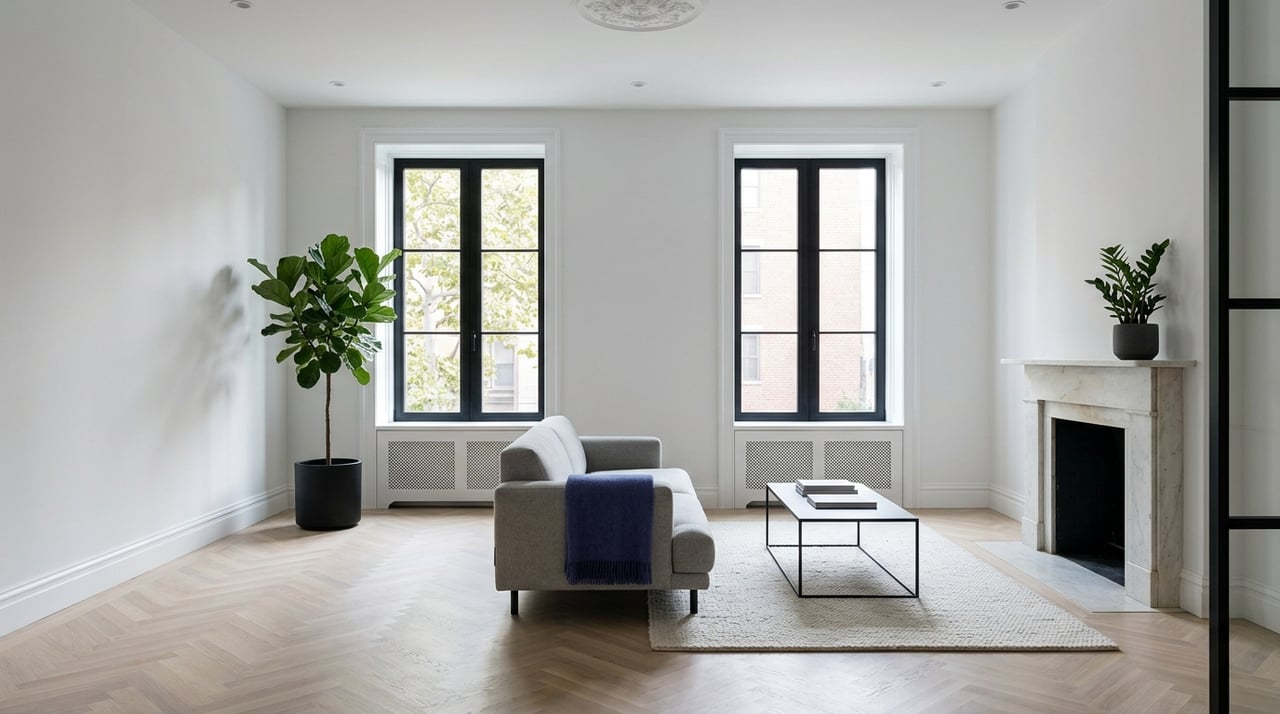
If you are searching for a Brooklyn brownstone, Cobble Hill and Brooklyn Heights will likely end up on the same shortlist. They sit close together, share landmarked architecture, and both deliver the kind of townhouse streetscape that draws buyers to brownstone Brooklyn in the first place. At the same time, they live very differently day to day, and those differences can shape everything from your renovation plans to your budget expectations. Let’s dive in.
What Both Neighborhoods Share
For brownstone buyers, the first big similarity is historic district status. Brooklyn Heights is designated as LP-0099, and Cobble Hill is designated as LP-0320 on the Landmarks Preservation Commission map. Brooklyn Heights is also identified by the city as the first New York City neighborhood designated a historic district.
That matters because, in both neighborhoods, you are not simply buying a townhouse. You are also buying into a preservation framework that can affect exterior work, additions, demolitions, façades, stoops, windows, and roof changes. Ordinary repairs are treated differently, but larger visible changes may require Landmarks Preservation Commission review.
If you expect to renovate after closing, this should be part of your planning from the start. Materials, design scope, and timing can all be affected by approvals. For many buyers, that is part of the appeal, since landmark protection helps preserve the streetscape that made the home desirable in the first place.
Cobble Hill’s Brownstone Feel
Cobble Hill tends to appeal to buyers who want a lower-scale, more intimate brownstone setting. The Landmarks Preservation Commission described it as an unusually fine 19th-century residential area with tree-lined streets, architecturally notable houses, relatively low and uniform building heights, distinguished churches, and two commercial streets.
In practical terms, that often translates to a neighborhood experience that feels residential first. Side streets are known for large brick townhouses and brownstones, while Court Street serves as the everyday commercial spine with independent retailers, coffee shops, boutiques, and bookshops.
For some buyers, that combination is the point. Cobble Hill can feel coherent and village-like, with a strong sense of neighborhood texture built around rowhouse blocks, front stoops, and walkable retail. If your ideal townhouse search centers on classic brownstone living rather than destination views, Cobble Hill often fits that brief well.
Brooklyn Heights’ Brownstone Appeal
Brooklyn Heights carries a different kind of identity. The city describes its homes and churches as among the finest examples of American architecture, and the neighborhood’s historic standing gives it a level of prestige that many buyers immediately recognize.
Its streetscape is still deeply residential, but the neighborhood often reads as more polished and view-oriented. The Promenade is its defining public space, and it gives Brooklyn Heights one of the most recognizable outlooks in New York, with views of the Brooklyn Bridge, the Manhattan skyline, New York Harbor, and South Street Seaport.
For brownstone buyers, Brooklyn Heights can also present a broader property mix. In addition to classic rowhouses, the neighborhood includes co-ops and condos, with a smaller group of very high-end houses. If you are comparing long-term options or looking across multiple property types before committing to a townhouse, that wider inventory mix may be useful.
Daily Life: Court Street or the Waterfront
A brownstone purchase is also a lifestyle decision, so the daily-use environment matters. In Cobble Hill, green space is compact and local. Cobble Hill Park is listed by the city at 0.585 acres and is described as a calm setting with 19th-century period materials and mature trees.
That supports a neighborhood pattern built more around street life than large open space. Your routine may revolve around short walks to Court Street, local shops, and residential side blocks. For buyers who want convenience and neighborhood rhythm more than a destination park, this can be a strong match.
Brooklyn Heights offers a larger open-space story. In addition to the Promenade, it benefits from nearby Brooklyn Bridge Park, an 85-acre waterfront park with promenades, gardens, events, and a wide range of recreation, open daily from 6 a.m. to 1 a.m. and active year-round.
That difference is meaningful. If regular access to major public space, waterfront walks, and iconic views is high on your list, Brooklyn Heights has the stronger amenity advantage. If you prefer a smaller-scale, retail-centered neighborhood texture, Cobble Hill may feel more natural.
How the Market Data Can Mislead Buyers
When buyers compare neighborhoods, median sales figures often seem like the fastest shortcut. In brownstone markets, though, headline medians can be misleading because they reflect different mixes of co-ops, condos, and houses.
In Cobble Hill, PropertyShark reported a median sale price of $710,000 in April 2026, with 4 transactions and a median price per square foot of $1,390. That same snapshot showed condos at $2.0 million and co-ops at $592,000, with no statistically significant house median for that month.
In Brooklyn Heights, PropertyShark reported a median sale price of $756,000 in May 2026, with 29 transactions and a median price per square foot of $2,325. The same report showed condos at $2.6 million, co-ops at $600,000, and houses at $8.2 million.
The takeaway is simple: if you are shopping specifically for a brownstone, neighborhood-wide medians do not tell the full story. Block, lot size, condition, layout, outdoor space, and landmark-related scope can matter more than a blended neighborhood average.
Why Cobble Hill Numbers Need Context
Cobble Hill’s pricing history also shows why buyers should be careful with broad averages. PropertyShark ranked Cobble Hill among the 10 priciest neighborhoods in New York City in 2025, with a $1.85 million median sale price. It then reported that Cobble Hill contracted to just under $1.2 million in the first quarter of 2026 even as sales rose.
That kind of movement does not automatically signal a major shift in brownstone value. In a neighborhood with relatively few trades and a mix of product types, the median can swing based on whether a few townhouses or condos closed in a given period. For a townhouse buyer, the more useful lens is often the specific asset rather than the headline statistic.
Renovation Planning Matters in Both
No matter which neighborhood you prefer, renovation planning deserves real attention before you commit. In both landmarked districts, exterior work such as façade changes, stoop work, cornice updates, rear-yard additions, window replacements, and roof alterations may require review by the Landmarks Preservation Commission.
That does not make either neighborhood less attractive. It simply means a brownstone purchase should be evaluated as both a home and a protected architectural asset. If your vision includes design changes soon after closing, it helps to build preservation timing and scope into your decision-making early.
Which Neighborhood Fits Your Search
The better fit often comes down to what you want your townhouse life to feel like.
Cobble Hill May Fit You Best If
- You want a smaller-scale brownstone environment
- You value a strong residential feel with active local retail
- You like Court Street as an everyday commercial corridor
- You are drawn to classic rowhouse blocks and a village-like streetscape
- You prefer neighborhood texture over major waterfront amenities
Brooklyn Heights May Fit You Best If
- You want landmark status with broad name recognition
- You value the Promenade and access to Brooklyn Bridge Park
- You want a more view-driven public realm
- You appreciate a polished residential setting
- You want to compare brownstones with a wider mix of condos and co-ops nearby
The Brownstone Buyer Bottom Line
For many buyers, this is not a question of which neighborhood is better. It is a question of which neighborhood better matches your priorities. Cobble Hill leans intimate, residential, and Court Street-centered. Brooklyn Heights leans iconic, waterfront-connected, and architecturally grand.
If you are evaluating either market, the smartest approach is to look past broad neighborhood labels and focus on the actual asset, the block, the renovation path, and the daily lifestyle each address supports. For tailored guidance on townhouse and luxury property searches in New York, connect with New York Collaborative .
FAQs
What is the main difference between Cobble Hill and Brooklyn Heights for brownstone buyers?
- Cobble Hill generally offers a more intimate, village-like brownstone setting centered on Court Street, while Brooklyn Heights offers stronger waterfront amenities, iconic views, and broader historic prestige.
Do Cobble Hill and Brooklyn Heights brownstones fall under landmark rules?
- Yes. Both neighborhoods are landmarked historic districts, so many exterior changes may require Landmarks Preservation Commission review.
Is Brooklyn Heights more expensive than Cobble Hill for houses?
- Based on the research report snapshot, Brooklyn Heights showed a house median of $8.2 million, while Cobble Hill did not have a statistically significant house median for that month, which shows how limited townhouse data can be in small samples.
Why are neighborhood median sale prices less useful for brownstone buyers?
- Neighborhood medians often combine co-ops, condos, and houses, so they can obscure what is happening specifically in the townhouse market.
What outdoor space options differ between Cobble Hill and Brooklyn Heights?
- Cobble Hill is anchored by smaller local green space such as Cobble Hill Park, while Brooklyn Heights benefits from the Promenade and nearby Brooklyn Bridge Park, an 85-acre waterfront park.
Should renovation plans affect your townhouse search in these neighborhoods?
- Yes. If you expect to change windows, stoops, façades, roofs, or add rear extensions, you should account for possible landmark review as part of your buying timeline.
